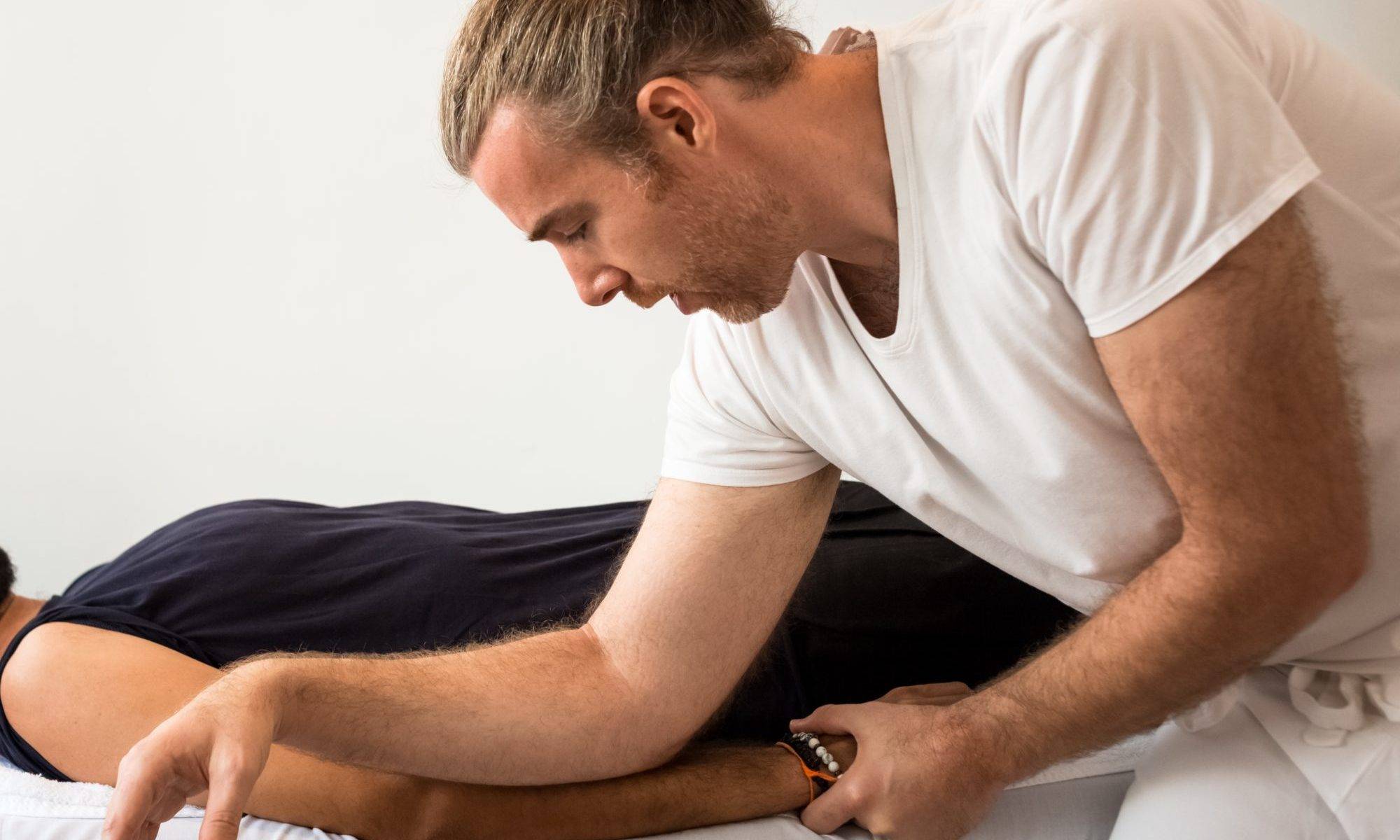
Bodywork that meets you—body, mind, and nervous system.
People find their way to me and this work for many reasons.
People come with chronic pain, neck and back tension, jaw and TMJ concerns, headaches and migraines, injuries, and other physical concerns. Others come because of anxiety, depression, trauma, chronic stress, overwhelm, or difficulty feeling settled or connected in their bodies. Sometimes it’s a combination of these things.
You don’t need to know what kind of work you need before you come in. We can begin with what you’re experiencing and go from there.

The place that hurts isn’t always the whole story.
My work is grounded in the physical body: how we move, breathe, bear weight, respond to gravity and touch, and organize ourselves from moment to moment.

A painful shoulder doesn’t exist separately from the ribs, spine, breath, pelvis, or the rest of the body supporting it. A tight jaw may involve much more than the jaw. And an area that feels chronically tense isn’t necessarily asking to be stretched harder or pressed more deeply.
Rather than looking only at the place that hurts, I’m interested in the relationships around it. Where is movement available? Where is it restricted? What seems to be working very hard? What changes when another part of the body finds more support?
This doesn’t mean searching for a single “root cause.” Bodies—and people—are more complicated than that. It means making room to notice relationships that may not have been obvious before.
More than one way into change
My work draws from Rolfing® and Structural Integration, Biodynamic Craniosacral Therapy, Somatic Movement and Education, Yoga Therapy, Manual Therapy, Visceral Manipulation, Osteopathic Approaches, Mindfulness, and other approaches I’ve been fortunate enough to study over many years.
But a session isn’t a collection of techniques applied according to a predetermined formula, just as a person isn’t a collection of separate parts that can always be understood or worked with in isolation.
Sometimes the work is clearly physical and hands-on. Touch might be firm and direct or extremely light. We may work with movement, breath, balance, or how different parts of the body support one another. At other times, attention to sensation, perception, emotion, or what is happening between us may become important. And sometimes we may work with very little touch—or none at all.
The method is not the point. The person in front of me is.
When the physical isn’t only physical
Our bodies don’t stop participating when an experience is called anxiety, depression, trauma, grief, stress, or overwhelm.

Breathing can change. Muscles brace. The jaw tightens. The abdomen holds. Movement becomes more guarded. Sensation can become overwhelming, distant, or difficult to feel at all.
For some people, these relationships are central to our work together. For others, they aren’t particularly important.
I don’t assume that all physical pain is psychological, that every pattern is a nervous-system problem, or that trauma is hiding somewhere in the tissues waiting to be released. At the same time, I don’t think we need to pretend that our physical bodies exist separately from our histories, environments, relationships, emotions, and ways of experiencing the world.
Sometimes making room for more of the person gives us more possibilities for working with the body.
What if you’ve already tried a lot?
That’s not unusual here. I don’t assume that previous approaches failed simply because you’re still looking.
Perhaps physical therapy helped one part of the problem. Massage gave relief, but the tension returned. Therapy changed how you understand yourself while something still feels unresolved physically. Yoga or exercise made you stronger but didn’t change a particular pattern. Or perhaps you’ve learned an enormous amount about yourself and still aren’t quite sure what to do with what you’re experiencing.
All of that is useful information. We can start with what has helped, what hasn’t, what you’ve learned along the way, and what is happening now.
Curiosity before certainty
I’ve spent almost twenty years studying bodies through Structural Integration, Movement, Yoga, Craniosacral Therapy and Biodynamics, Somatic Education, Meditation, Trauma Study, and hands-on practice.
Alongside that work, I have an ongoing passion for neuroscience and philosophy— particularly questions involving pain, perception, embodiment, consciousness, agency, and how we come to experience a body as our own.
The more I’ve studied, the less interested I’ve become in simple explanations. Pain doesn’t always tell us precisely what is happening in a tissue. Posture isn’t simply good or bad. More pressure doesn’t necessarily create more change. And we don’t always need to understand exactly why something is happening before something different can become possible.
You don’t need to understand anatomy, neuroscience, philosophy, fascia, or the nervous system to work with me. You can come because your neck hurts.

Working with the person in front of me
I’m Andrew Rosenstock, a Certified Rolfer®, Board Certified Structural Integrator, Certified Rolf Movement® Practitioner, Registered Somatic Movement Therapist, Biodynamic Craniosacral Practitioner, and Certified Yoga Therapist.
My work has developed through thousands of hours of study and almost twenty years of working with bodies, movement, touch, and awareness. It continues to change as I learn—from teachers and research, certainly, but also from the people I work with every day.
I don’t expect every person to need the same thing, respond in the same way, or have the same goals. What matters to me is creating enough room for us to discover what is actually useful for you.