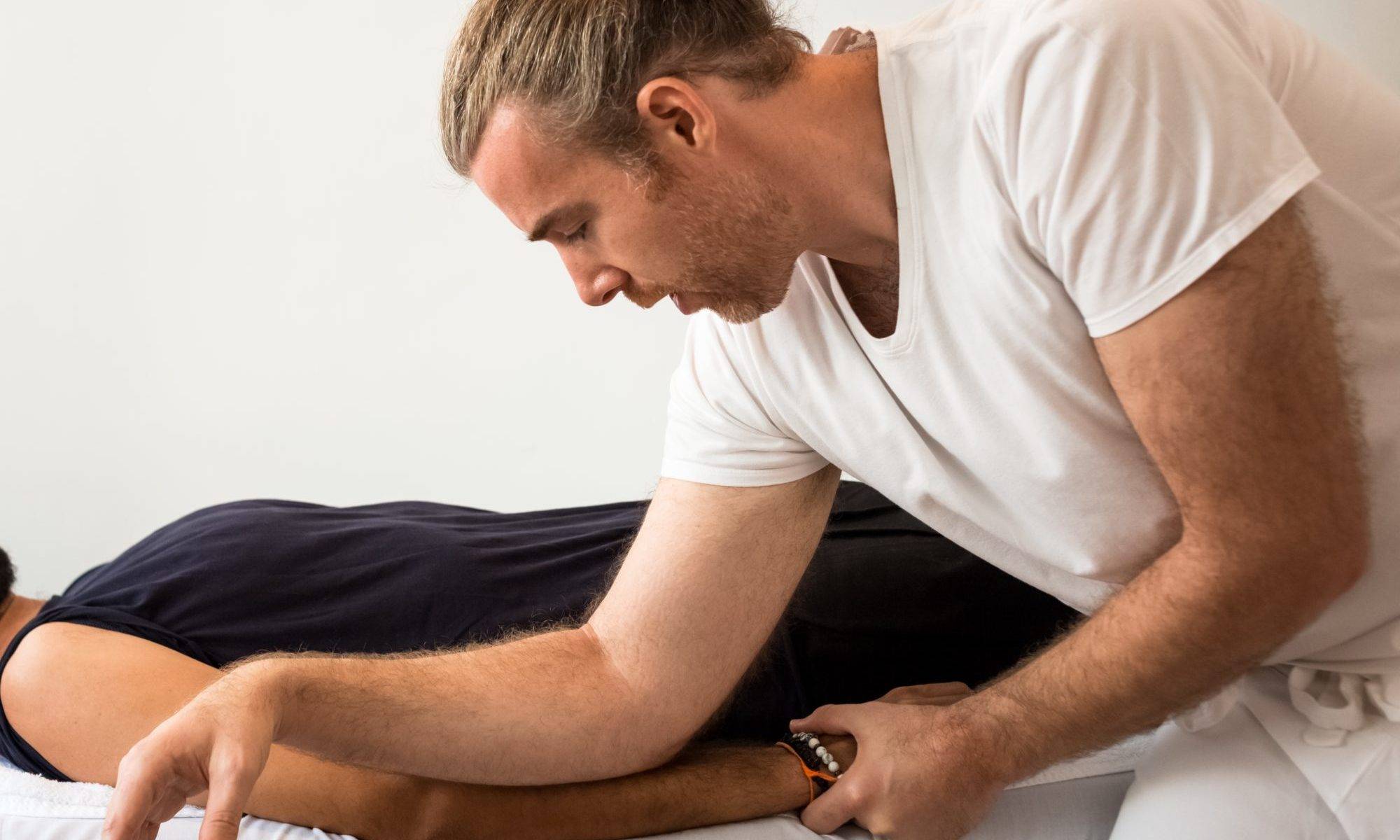
The mind-body connection is not a wellness trend or abstract concept. It is a well-documented relationship between your physical body and your emotional state, one that shapes how you feel, think, and move through the world every day. When your body holds tension, your mood often follows. When your emotions feel stuck, your body tends to mirror that too. Understanding this relationship is the first step toward healing that actually reaches the root of what you are experiencing.
Bodywork therapies like Rolfing, Craniosacral Therapy, Somatic Therapy, and Visceral Manipulation work directly with this connection. Rather than treating the body as separate from the mind, these approaches recognize that lasting emotional well-being often requires physical intervention. At Rolfing In Boston, this understanding shapes everything we do.
What Is the Mind-Body Connection?
The mind-body connection refers to the ongoing, two-way communication between your brain, nervous system, and physical body. Your thoughts and emotions influence your physical sensations, and your physical state shapes how you feel emotionally. This is not metaphorical. It is biological, neurological, and deeply practical.
Your nervous system acts as the bridge between these two worlds. When you feel stressed, anxious, or overwhelmed, your body responds in real time. Muscles tighten, breathing becomes shallow, digestion slows, and the body shifts into a protective state. Over time, when stress is frequent or unresolved, these physical responses can become habitual. The body, in a sense, learns to stay on guard.
Research in fields like psychoneuroimmunology has confirmed that emotional experiences affect immune function, hormone levels, and tissue health. What you feel emotionally leaves a physical trace, and what you carry physically often has an emotional story behind it. This is why so many people experiencing chronic pain, persistent fatigue, or unexplained tension find that conventional treatments only go so far.
Bodywork addresses this gap. By working directly with the body’s tissues, fascia, fluids, and nervous system, these therapies can shift both the physical and emotional dimensions of stress at the same time.
Why Does the Body Hold Onto Stress and Emotion?
The body holds onto stress because of how the autonomic nervous system responds to perceived threats. When you encounter something stressful, whether a difficult conversation, an accident, or years of chronic pressure, your nervous system activates a survival response. You may fight, freeze, or pull away. This is a healthy and intelligent function in the short term.
The problem arises when the stress response does not fully complete. Dr. Peter Levine, the founder of Somatic Experiencing, identified that unresolved survival responses become stored in the body as physical tension, chronic activation, or emotional numbness. His work, along with research by Dr. Bessel van der Kolk documented in “The Body Keeps the Score,” shows that trauma and chronic stress are not only psychological. They live in the muscles, connective tissue, and nervous system long after the original experience has passed.
This means that even when you have processed an experience mentally, the body may still be holding a version of it. You might notice this as a chronic tightness in your shoulders, a feeling of being on edge without a clear reason, or a persistent fatigue that does not improve with rest. These are not signs of weakness. They are signs that the body is still carrying something it has not had the support to release.
Bodywork creates a direct pathway to those stored responses. By working through physical tissue and the nervous system, it can help the body complete what was left unfinished, often bringing emotional relief alongside physical ease.
How Bodywork Therapies Address Emotional Well-Being
Several bodywork modalities work specifically with the relationship between physical tension and emotional experience. Each one offers a different entry point into the mind-body connection, and each can support emotional well-being in its own way.
Rolfing and Structural Integration for Emotional Release
Rolfing Structural Integration is a hands-on therapy that works with the fascia, the web of connective tissue that surrounds and connects every muscle, organ, and bone in your body. Over time, physical and emotional patterns can become embedded in the fascial system, shaping posture, movement, and how the body holds tension.
Rolfing systematically addresses these patterns by releasing restrictions in the fascia through precise, applied pressure and movement guidance. Clients frequently report that as physical tension releases, emotional shifts follow. A long-held tightness in the chest may soften alongside a sense of emotional relief. Chronic shoulder tension may ease while a feeling of carrying too much begins to lift.
This is not a coincidence. Fascia is richly innervated, meaning it is full of nerve endings that communicate directly with the brain. When fascial restrictions release, the nervous system receives new information, and both the physical and emotional landscape can shift. Rolfing is particularly useful for those who feel stuck in patterns, physically and emotionally, that they cannot seem to move past on their own.
Craniosacral Therapy and Nervous System Calming
Craniosacral Therapy uses very light touch, typically no heavier than the weight of a nickel, to work with the rhythmic movement of cerebrospinal fluid that surrounds and nourishes the brain and spinal cord. This gentle approach works directly with the central nervous system, which governs the stress and relaxation responses in the body.
When the craniosacral system is restricted or out of rhythm, the nervous system often remains in a heightened state, contributing to anxiety, poor sleep, headaches, and difficulty settling. Craniosacral Therapy supports the body in returning to a more regulated state by releasing these restrictions and restoring natural rhythm.
Clients often describe a profound sense of calm during and after sessions. Many notice improved sleep quality, reduced anxiety, and a greater ability to manage daily stress. For those whose nervous systems have been running in overdrive for a long time, this kind of deep regulation can feel genuinely transformative. Because the touch is so gentle, this therapy is especially well suited for people who are sensitive to more direct physical work or who are working through experiences that require a careful, gradual approach.
Somatic Therapy for Processing Stored Experiences
Somatic Therapy is a body-centered approach that guides you to pay attention to physical sensations as a way of understanding and releasing stored emotional experiences. Rather than focusing primarily on thoughts or narrative, as traditional talk therapy does, Somatic Therapy works with what is happening in the body moment by moment.
A session might involve gentle movements, focused breathing, tracking sensations in real time, or working with posture and gesture to access what the body is holding. The approach is always client-led, meaning you move at your own pace and nothing is forced or rushed. This makes it particularly well suited for people working through anxiety, chronic stress, or experiences that have been difficult to process through conversation alone.
The goal is not to relive difficult experiences but to help the nervous system complete responses that were interrupted and to build a greater capacity for presence, safety, and ease. Over time, clients often report feeling more connected to themselves, less reactive to stress, and more grounded in their daily lives.
Visceral Manipulation and Its Emotional Dimensions
Visceral Manipulation is a gentle therapy that works with the mobility and function of the internal organs. The organs, like all tissues in the body, can develop restrictions from stress, injury, surgery, or emotional experiences. When an organ loses its natural movement and ease, this can create tension that radiates outward into the surrounding structures and affects the nervous system overall.
What many people do not realize is that the organs have a direct relationship with the emotional body. The gut, for example, contains an extensive network of neurons and is deeply connected to mood and anxiety regulation. The diaphragm, the heart, and the liver all carry significant emotional associations in both traditional and modern clinical understanding.
Visceral Manipulation uses light, precise touch to listen to the body’s internal movement patterns and gently encourage release where restriction is found. As organ tension releases, clients often notice a broader sense of ease, sometimes accompanied by emotional shifts or a feeling of emotional weight lifting. This therapy works well as part of a broader bodywork plan, particularly when other physical or emotional symptoms seem connected to digestive discomfort, chronic tension around the torso, or a sense of being held tight from the inside.
Who Can Benefit from Mind-Body Bodywork?
Mind-body bodywork is not reserved for any particular type of person or condition. It is appropriate for a wide range of people, including those who have been managing anxiety, chronic stress, burnout, emotional numbness, or unexplained physical tension for a long time.
Many people who come to Rolfing In Boston have already tried conventional approaches such as medication, talk therapy, or physical therapy. These treatments are valuable, and they often help significantly. But some people find that something is still missing, that the body has not caught up with what the mind has worked through, or that stress keeps returning in physical form despite their best efforts. If this resonates with you, mind-body bodywork may offer the missing piece.
This work can also support people who are navigating difficult life transitions, recovering from illness or surgery, adjusting to grief, or simply feeling disconnected from themselves. You do not need to be in crisis to benefit. Many clients come in because they want to feel better in their bodies, sleep more deeply, or move through life with more ease and less tension. Whatever brings you in, the work meets you where you are.
What to Expect During a Session at Rolfing In Boston
A session at Rolfing In Boston begins with a conversation. Before any hands-on work, your practitioner will take time to understand what you are experiencing, what you are hoping to address, and what feels comfortable for you. This initial exchange is not just a formality. It is how your practitioner begins to understand your body’s patterns and what approach will be most helpful.
Sessions are trauma-informed, meaning that your sense of safety, boundaries, and consent guide every step. You are always in control of the pace and the process. Nothing is done to you. Everything is done with you, collaboratively, with your nervous system’s responses and comfort as the central guide.
Depending on what you are working through, a session may draw on one or several modalities including Rolfing, Craniosacral Therapy, Somatic Therapy, or Visceral Manipulation. Your practitioner selects the approach based on what your body is communicating in that session, not on a fixed protocol. This responsiveness is one of the qualities that makes each session feel genuinely personal rather than routine.
You may leave a session feeling deeply relaxed, lighter, or more present in your body. Some clients notice emotional shifts in the hours or days following a session as the body continues to integrate the work. There is no single experience that everyone has, and that is exactly the point. The work is as individual as you are.
Is Bodywork a Substitute for Therapy or Mental Health Treatment?
Bodywork is not a substitute for psychotherapy or mental health treatment. This distinction matters, and it is one that the practitioners at Rolfing In Boston take seriously.
Psychotherapy, psychiatric care, and other mental health treatments address the cognitive, emotional, and psychological dimensions of well-being in ways that bodywork does not. If you are working with a therapist, psychiatrist, or counselor, continuing that work is important. Bodywork does not replace what those relationships and approaches offer.
What bodywork does offer is a complementary path. It works with the physical dimension of emotional experience, the nervous system, the tissues, the body’s stored responses, in ways that talk-based approaches often cannot reach. Many mental health professionals recognize this and actively encourage their clients to incorporate body-centered work as part of a broader care plan.
If you are considering bodywork alongside mental health treatment, we encourage you to speak with your healthcare provider. We are happy to communicate and collaborate with your existing care team when that is helpful and when you give us permission to do so. At Rolfing In Boston, we see ourselves as one part of a larger picture of your health, not the whole picture.
Frequently Asked Questions
What is the mind-body connection and why does it matter for healing?
The mind-body connection is the relationship between your thoughts, emotions, and physical body. Your emotional state directly influences physical sensations like muscle tension, breathing, and energy levels, and your physical state shapes how you feel emotionally. It matters for healing because many chronic physical symptoms, such as persistent pain, fatigue, or tension, have emotional components that conventional physical treatments do not address. Healing that works with both dimensions tends to be more complete and longer lasting.
Can bodywork help with anxiety and emotional stress?
Yes, bodywork can be very effective for anxiety and emotional stress. Therapies like Craniosacral Therapy and Somatic Therapy work directly with the nervous system to help shift the body out of a chronically activated stress response. Over time, this can reduce anxiety, improve sleep, and build a greater capacity for calm. Results vary by individual, but many clients notice meaningful changes within a few sessions.
How is Somatic Therapy different from traditional talk therapy?
Traditional talk therapy focuses primarily on thoughts, memories, and emotional narrative. Somatic Therapy focuses on what is happening in the body, sensations, posture, breath, and movement, as a way of accessing and releasing stored stress or emotional experiences. Both approaches have real value. Somatic Therapy is particularly useful when verbal processing alone has not brought full relief, or when someone finds it easier to begin with physical awareness rather than words.
How many sessions does it take to notice emotional benefits from bodywork?
This varies depending on the individual, the modality, and what you are working through. Some clients notice a shift after one or two sessions. Others find that the changes build gradually over several months of consistent work. There is no fixed timeline, and your practitioner will help you understand what a realistic process might look like for your specific situation.
Is bodywork safe for people with a history of trauma?
Yes, when practiced by a trained, trauma-informed practitioner, bodywork is safe for people with a history of trauma. At Rolfing In Boston, all work is done at your pace, with your comfort and boundaries leading the session. The goal is never to push through difficulty but to work gently and collaboratively with the nervous system. If you have concerns about how your history might affect your experience, discussing this with your practitioner before beginning is always encouraged.
Can I combine bodywork with my existing mental health treatment?
Absolutely. Bodywork and mental health treatment can work very well together. Many therapists and psychologists actively recommend body-centered work as a complement to therapy, particularly for clients dealing with anxiety, chronic stress, or trauma. If you are currently in mental health treatment, letting both your therapist and your bodywork practitioner know allows each professional to support you more effectively.
What makes Rolfing In Boston’s approach to emotional well-being different?
Rolfing In Boston takes a genuinely integrated approach to the body and mind. Rather than focusing on a single technique, sessions are shaped by what your body needs in the moment and may draw on Rolfing, Craniosacral Therapy, Somatic Therapy, or Visceral Manipulation. The work is trauma-informed, personalized, and grounded in the understanding that physical patterns and emotional patterns are deeply connected. For people who have not found relief through conventional approaches alone, this integrative, body-first perspective often makes a meaningful difference.